
They Don't Get to Write All the Stories
Or why I am opting out of GenAI
For those concerned about generative AI, we hear a lot about ethics, intellectual property, art, and even the future of humanity and death by robot. But few, at least in the circles of education and writing that I inhabit most often, are talking about the most pressing of existential threats posed by the continued use and development of generative AI: the acceleration of planetary destruction due to climate change.
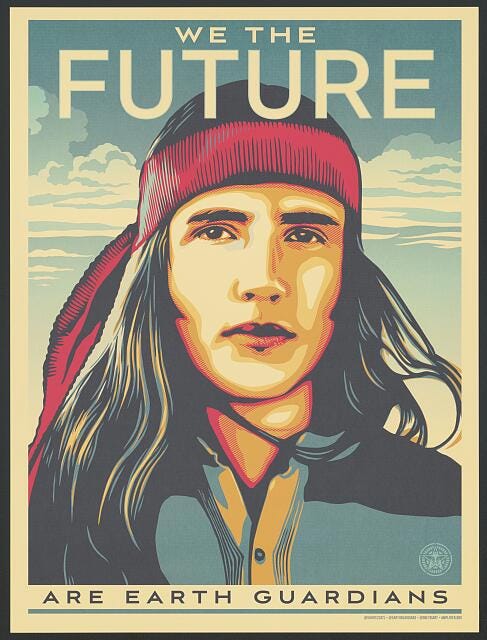
Perhaps you feel I’m being alarmist? Ok. But I believe any use of AI must be viewed in light of its impact on Earth’s climate, and the least we can do is acknowledge it. The tech bros know it and don’t care. In fact, I suspect some of them might welcome it. Regardless of their motives, it’s certain: while we’re all arguing over academic integrity and professional productivity and Terminator and deep fakes, we aren’t paying attention to the fact that this tool will accelerate the climate crisis irrevocably. And when the planet is proven uninhabitable, it will be the same tech bros who offer us a spot in their off-planet1 colony2. For a price that only some will be able to afford.
I’m choosing not to go into the deeper history of space colonization and AI and computing and the connections between fascism and technology, trusting that you can find as much on that as you might desire. Instead, here are some highlights from the last few years.
THE ENVIRONMENTAL COSTS3
Energy Use:
“a generative AI training cluster might consume seven or eight times more energy than a typical computing workload,” says Noman Bashir, lead author of the impact paper, who is a Computing and Climate Impact Fellow at MIT Climate and Sustainability Consortium (MCSC) and a postdoc in the Computer Science and Artificial Intelligence Laboratory (CSAIL).
Scientists have estimated that the power requirements of data centers in North America increased from 2,688 megawatts at the end of 2022 to 5,341 megawatts at the end of 2023, partly driven by the demands of generative AI. Globally, the electricity consumption of data centers rose to 460 terawatts in 2022. This would have made data centers the 11th largest electricity consumer in the world, between the nations of Saudi Arabia (371 terawatts) and France (463 terawatts), according to the Organization for Economic Co-operation and Development.
By 2026, the electricity consumption of data centers is expected to approach 1,050 terawatts (which would bump data centers up to fifth place on the global list, between Japan and Russia).
While not all data center computation involves generative AI, the technology has been a major driver of increasing energy demands. Researchers have estimated that a ChatGPT query consumes about five times more electricity than a simple web search.
“But an everyday user doesn’t think too much about that,” says Bashir. “The ease-of-use of generative AI interfaces and the lack of information about the environmental impacts of my actions means that, as a user, I don’t have much incentive to cut back on my use of generative AI.”
Water:
“Chilled water is used to cool a data center by absorbing heat from computing equipment. It has been estimated that, for each kilowatt hour of energy a data center consumes, it would need two liters of water for cooling, says Bashir.
“Just because this is called ‘cloud computing’ doesn’t mean the hardware lives in the cloud. Data centers are present in our physical world, and because of their water usage they have direct and indirect implications for biodiversity,” he says.”
No one wants to live near one of these. Like a garbage dump or a wastewater treatment facility or a regional trash incinerator, they have very real implications at the lived, human level. Noise, in particular.
A 2019 piece in The New Yorker suggested noise could be the next public health crisis. Of course, with COVID-19 becoming the actual next public health crisis, it makes sense that this argument got drowned out. But it has merit. There’s also other evidence of serious disruptions (like increased asthma attacks due to ozone pollution or your water supply drying up). And whenever there’s an industry or necessary service with public health implications, you can be sure those impacts will be felt by those who are already marginalized, compromised, and dismissed in our society. To subscribe to the unfettered development of data centers to fuel something that no one asked for but “dang, it’s cool” is to suggest today’s bright shiny object is more important than someone else’s health.
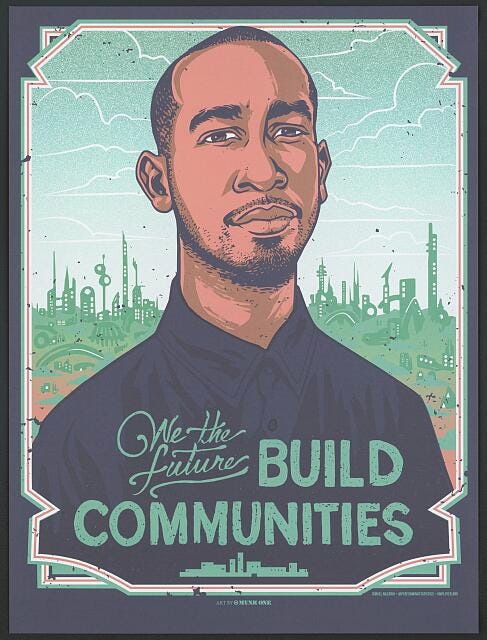
There is a huge financial incentive behind getting these centers built without opposition, and to oppose them, you’d have to know they are happening. Here’s the Times explaining the difficulties:
Residents rarely learn how data centers may affect their lives until it’s too late. Big tech operators are aggressively deploying nondisclosure agreements to force local officials, construction workers and others to keep these projects under wraps.
For tech firms, the incentives to build more of these centers are immense: A McKinsey analysis projected the generative A.I. business could eventually be worth nearly $8 trillion worldwide. Tech companies don’t want to tip off rivals that might try to swoop in and steal a viable site for development. That’s part of the reason they so zealously enforce nondisclosure agreements. But it’s more than that; they also seem to want to avoid angering locals who might learn of the coming disruptions and protest zoning changes.
The tactics companies have deployed in recent years to build their massive data center networks are downright mercenary, and regulators now need to step in to make sure the communities most affected by these industrial projects can learn about and evaluate them for themselves.
At the moment, without those measures in place, residents and environmental groups have to go up against the tech firms largely on their own just to obtain basic details about the water, energy and noise impacts.
We can ignore the costs associated with our entertainment or convenience. We often do. But in this case, I am choosing not to.
The stories those in power are telling us is that GenAI is progress, it’s an advancement, it’s the answer to our problems, it’s a necessity if you want to be competitive in school or work, it’s fun! Stories have power, and I refuse to allow the technocracy to author our future. There are other futures available, and we can choose to live inside them.
Further Reading
Senate Bill: https://www.congress.gov/bill/118th-congress/senate-bill/3732/text
https://thereader.mitpress.mit.edu/the-staggering-ecological-impacts-of-computation-and-the-cloud/
https://www.channelpronetwork.com/2025/02/14/the-us-wants-greenland-is-ai-the-reason/
MIT Colleagues evaluation of environmental impact: https://mit-genai.pubpub.org/pub/8ulgrckc/release/2
Rebecca Solnit, writing for the Guardian: https://www.theguardian.com/commentisfree/2019/oct/10/power-silicon-valley-climate-crisis-big-tech-profitable